Short quotes and meaningful phrases: best ideas for your next ink in Dublin
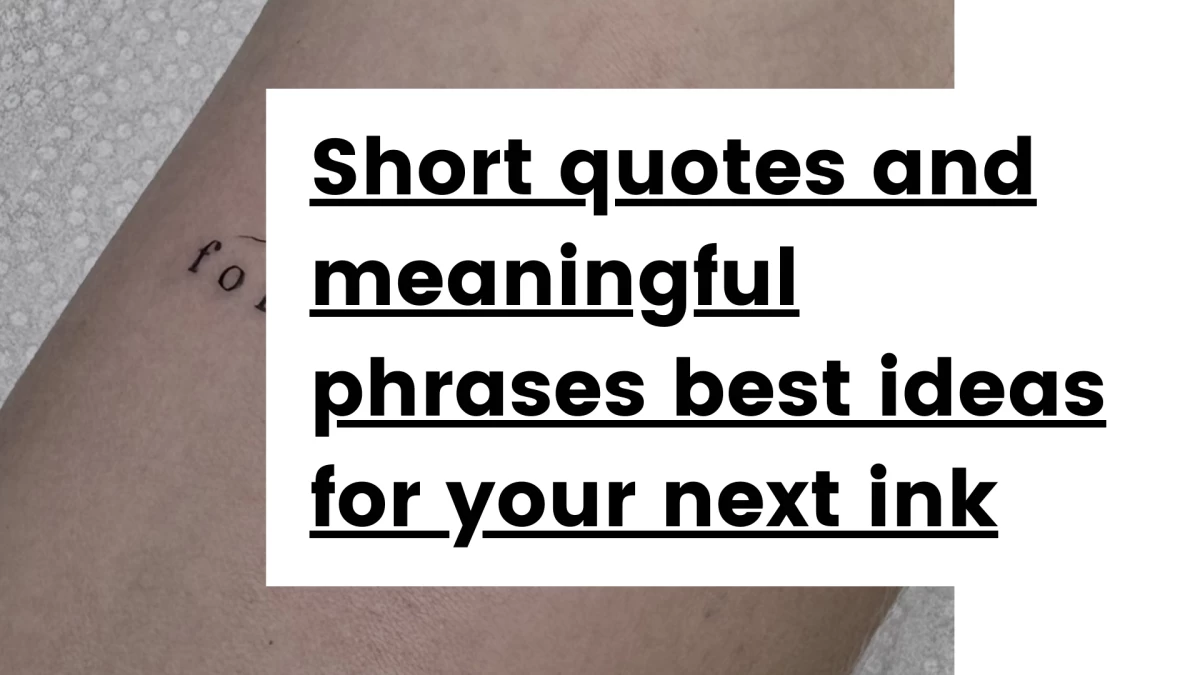
Because sometimes a few words say more than an entire sleeve.
There is something quietly fascinating about word tattoos. In an industry dominated by visual spectacle — large sleeves, intricate realism, bold colour work — lettering remains paradoxical. It is visually minimal, yet conceptually dense. It often occupies very little skin, yet carries disproportionate emotional weight.
At Black Hat Tattoo Studio Dublin, quote tattoos and meaningful phrases are among the most consistently requested designs. Not because they are trendy, and certainly not because they are simple, but because they operate in a different psychological space than most tattoos. They are not merely decorative. They function as reminders, anchors, fragments of identity, or sometimes private dialogues written directly onto the body.
Short quotes, in particular, have become a defining feature of contemporary tattoo culture. Their popularity is not accidental. It reflects a broader shift in aesthetic values: away from excess, toward clarity; away from visual noise, toward conceptual precision.
The modern quote tattoo is rarely loud. It does not need to be.
Minimalism, when applied to language, behaves differently than minimalism applied to imagery. A small visual element can feel understated. A small sentence can feel enormous.
Words do that.
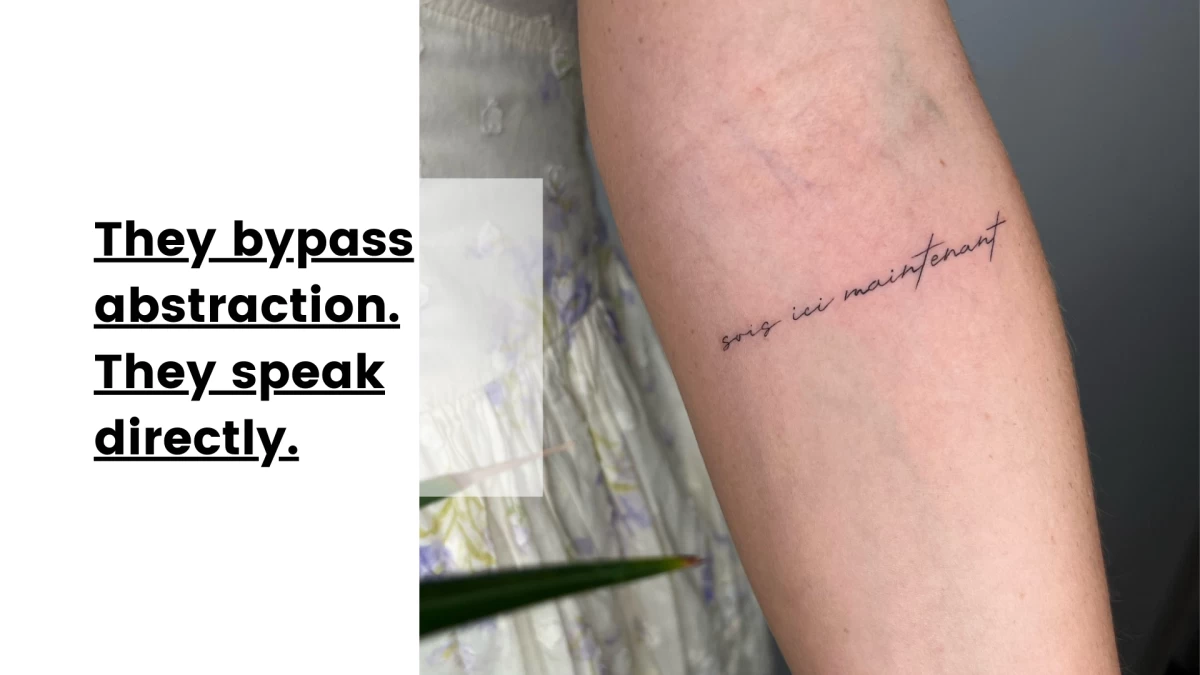
They bypass abstraction. They speak directly.
Yet despite their apparent simplicity, lettering tattoos are among the most technically demanding forms of tattooing. There is no shading to soften imperfections, no texture to disguise inconsistencies, no heavy composition to absorb imbalance. Typography is unforgiving by nature. Human perception is extraordinarily sensitive to irregularities in letters, spacing, rhythm, and proportion. Even viewers with no design background instinctively detect when something “feels off”.
This is why quote tattoos occupy a peculiar position. They appear minimal. They are anything but trivial.
The appeal of short phrases lies partly in their economy. In visual design, reduction is often associated with refinement. In tattooing, reduction introduces risk. The fewer the elements, the greater the exposure of every decision. A single word must carry visual balance, technical precision, and emotional coherence simultaneously.
This is where many misconceptions arise.
There is a persistent cultural belief that quote tattoos are an easy option. “It’s just text.” “It’s small.” “It’s quick.” The reality is structurally different. Lettering is one of the styles with the smallest margin for error. Line consistency becomes critical. Depth control becomes critical. Spacing becomes critical. Even minute variations in stroke weight alter perception. A fraction of a millimetre can determine whether a tattoo ages gracefully or blurs into visual ambiguity.
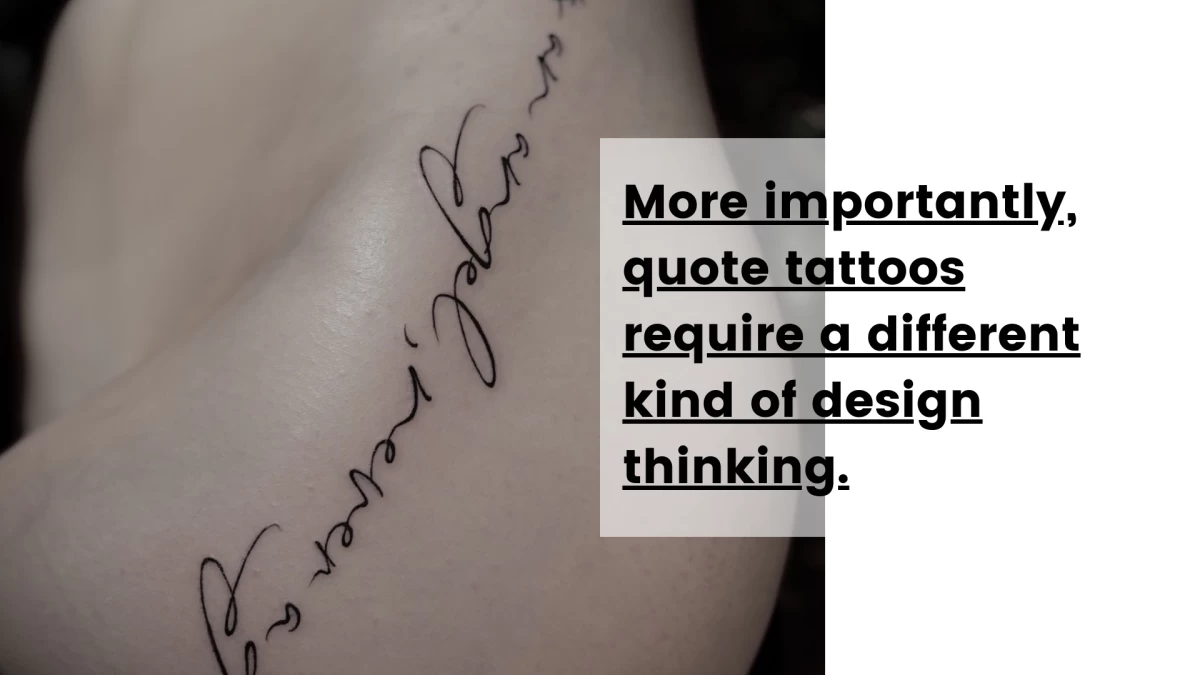
More importantly, quote tattoos require a different kind of design thinking.
Unlike illustrative tattoos, which often communicate through symbolism, mood, and visual storytelling, word tattoos communicate explicitly. Their meaning is not interpreted — it is read. This changes the psychological relationship between the tattoo and its wearer. Images can evolve conceptually over time. Words remain linguistically fixed. Their longevity therefore depends not only on technical execution but on semantic durability.
Choosing a phrase is less about aesthetics and more about narrative alignment.
What makes short quotes particularly compelling is their flexibility. A concise sentence resists visual clutter. It integrates easily with anatomy. It retains legibility across scales. It adapts to multiple typographic interpretations. A brief phrase can feel delicate, bold, poetic, ironic, introspective, or rebellious depending entirely on execution.
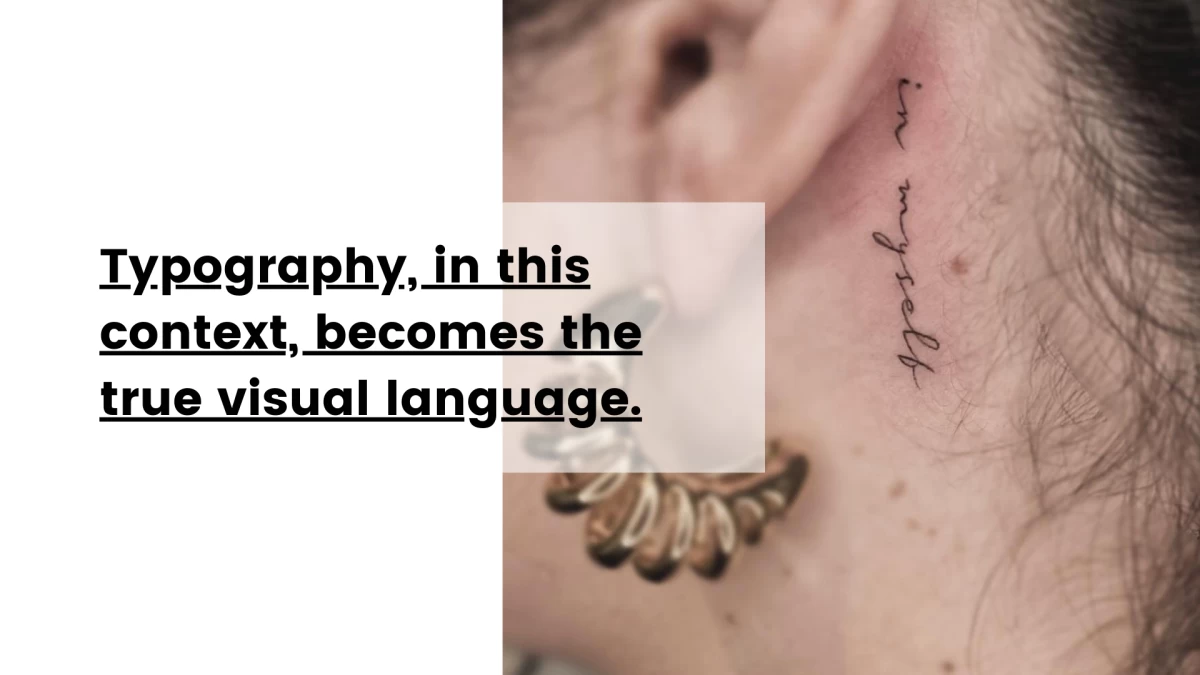
Typography, in this context, becomes the true visual language.
Consider how differently the same words behave when rendered in distinct styles. A minimalist sans serif communicates restraint, modernity, clarity. A flowing script introduces softness, emotion, fluidity. A fine serif can evoke elegance or literary associations. A raw handwritten style carries intimacy or vulnerability. The phrase itself does not change. The perception does.
This is one of the subtler aspects of lettering tattoos: they operate simultaneously as language and image.
In Dublin, there is a noticeable inclination toward understatement. Many clients seek tattoos that feel personal rather than performative. Short quotes align naturally with this sensibility. They do not dominate visual space. They coexist with the body rather than competing for attention. They function as quiet signals rather than declarations.
This does not make them conservative.
On the contrary, subtle tattoos often carry stronger conceptual intent than overtly dramatic designs. Reduction forces clarity. A short phrase leaves no room for ambiguity of purpose. It either resonates, or it does not.
The motivations behind meaningful phrase tattoos are rarely impulsive. Contrary to stereotype, most clients spend considerable time reflecting on their choices. These tattoos often emerge from transitions, internal shifts, periods of uncertainty, personal philosophies, humour, grief, resilience, or identity recalibration.
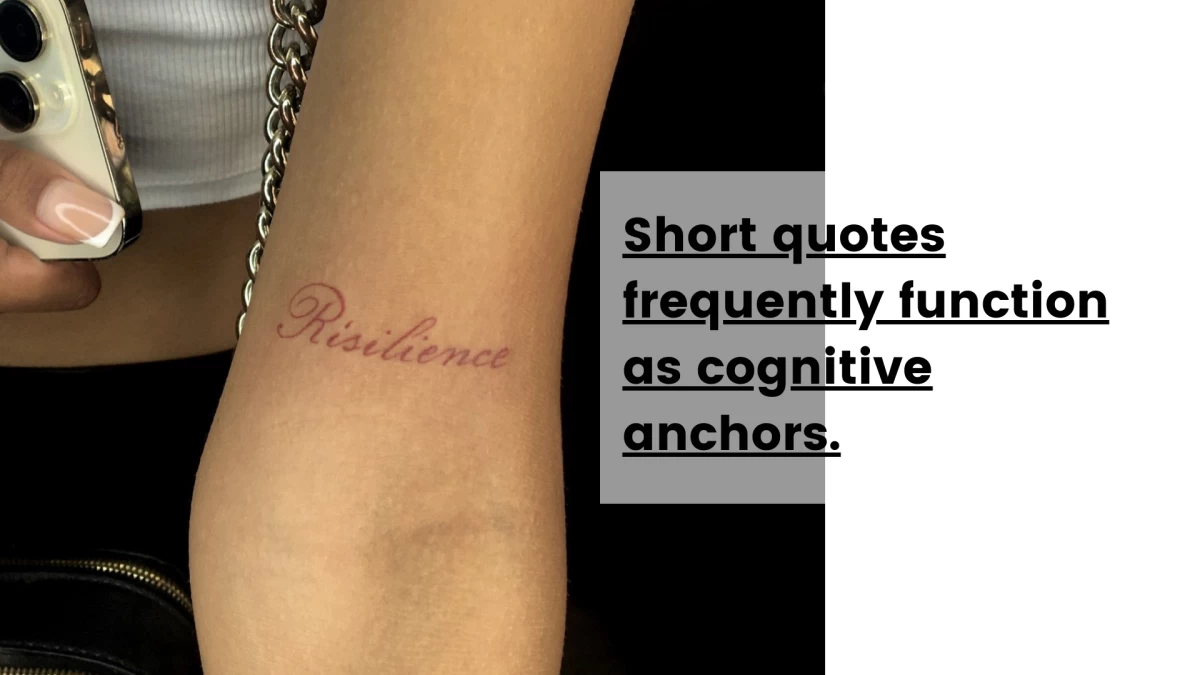
Short quotes frequently function as cognitive anchors.
They are not descriptions of a life. They are fragments of orientation within it.
A phrase like “still learning” carries structural openness. It accommodates change, growth, reinvention. It resists obsolescence because its meaning evolves alongside the wearer’s experience. A sentence such as “one day at a time” operates less as a statement and more as a behavioural reminder. Its power lies not in originality but in sustained relevance.
This distinction is important.
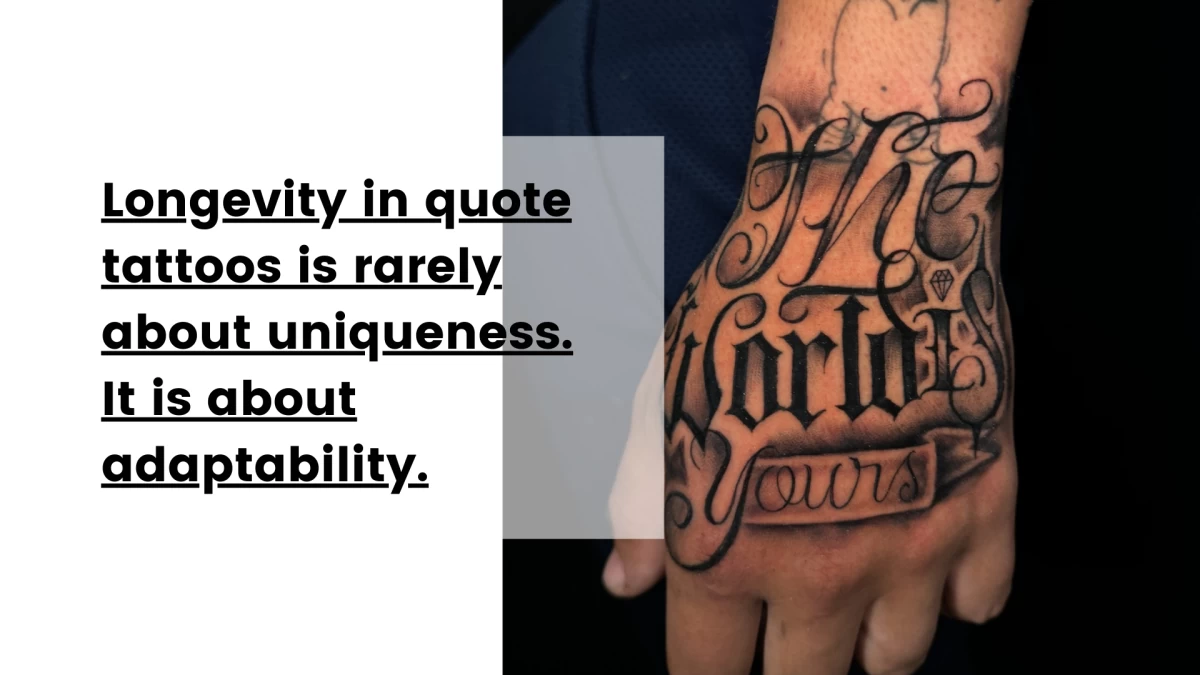
Longevity in quote tattoos is rarely about uniqueness. It is about adaptability.
Language tied too tightly to a specific emotional moment risks contextual collapse. Phrases born exclusively from transient states — intense romantic idealisation, acute distress, hyper-specific humour cycles — may lose psychological resonance even when technical execution remains flawless. The tattoo does not degrade. The meaning does.
This is why restraint tends to outperform intensity.
Short, open-ended phrases age psychologically better than definitive proclamations. They allow reinterpretation. They leave space for narrative evolution. They remain companions rather than constraints.
Interestingly, minimalist quotes also alter the internal experience of a tattoo.
Words on skin inevitably become part of self-dialogue. They are seen repeatedly, often unconsciously. They function as visual thoughts embedded in daily perception. A phrase that feels authentic produces cognitive alignment. A phrase that feels forced produces subtle friction.
This is not a design issue. It is a psychological one.
Reading a tattoo is not the same as reading a sentence on paper.
The body introduces permanence into language.
Placement further shapes perception. A small phrase on the wrist carries different connotations than the same phrase along the collarbone or ribcage. Visibility influences emotional tone. Public placements transform quotes into outward signals. Intimate placements preserve inward dialogue.
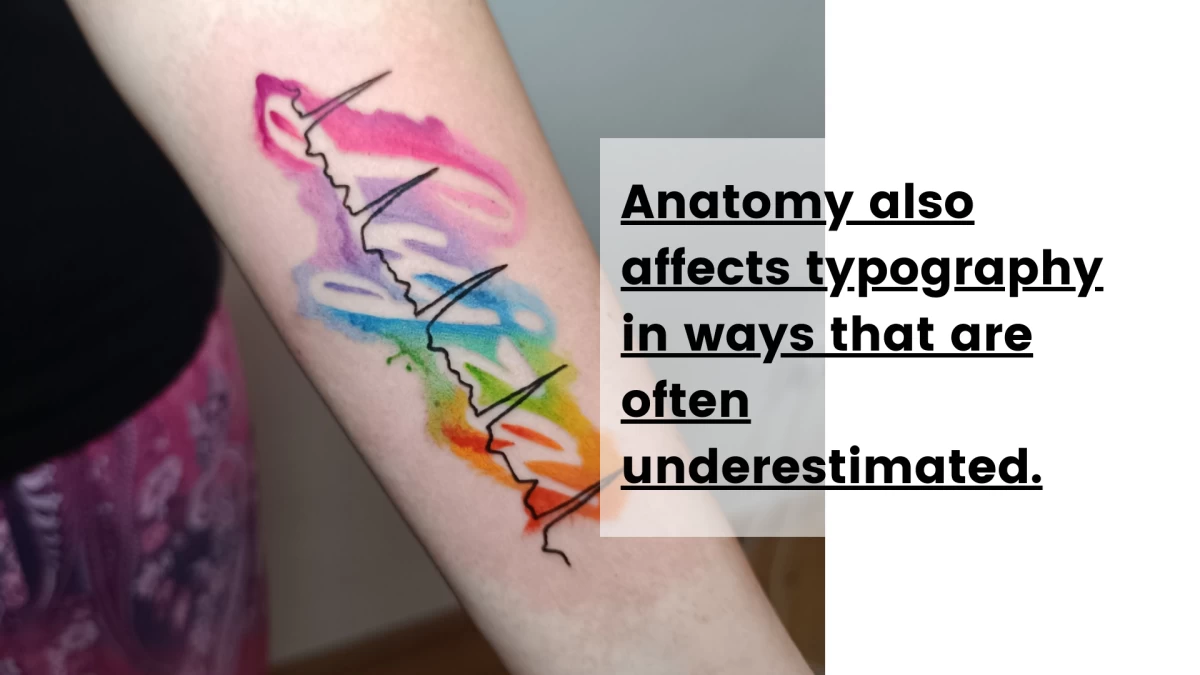
Anatomy also affects typography in ways that are often underestimated.
Skin is not a flat canvas. Curvature, tension, movement, and aging dynamics influence how letters read over time. Typography must flow with body lines. Poor alignment distorts rhythm. Distortion compromises legibility. Legibility is the structural foundation of lettering tattoos.
At Black Hat Tattoo Studio Dublin, consultations around quote tattoos tend to prioritise structural integrity over immediate aesthetics. Decisions regarding font, spacing, scale, stroke weight, and placement are evaluated not solely for visual appeal but for aging behaviour. Clean now but compromised later is not considered a successful outcome.
Minimalist lettering only appears effortless when executed with discipline.
There is also a cultural shift worth noting. Quote tattoos increasingly reject dramatic or ornamental excess. Contemporary preferences lean toward clarity, subtle irony, poetic minimalism, introspective language, or quiet humour. This reflects broader aesthetic movements across fashion, graphic design, and visual culture.
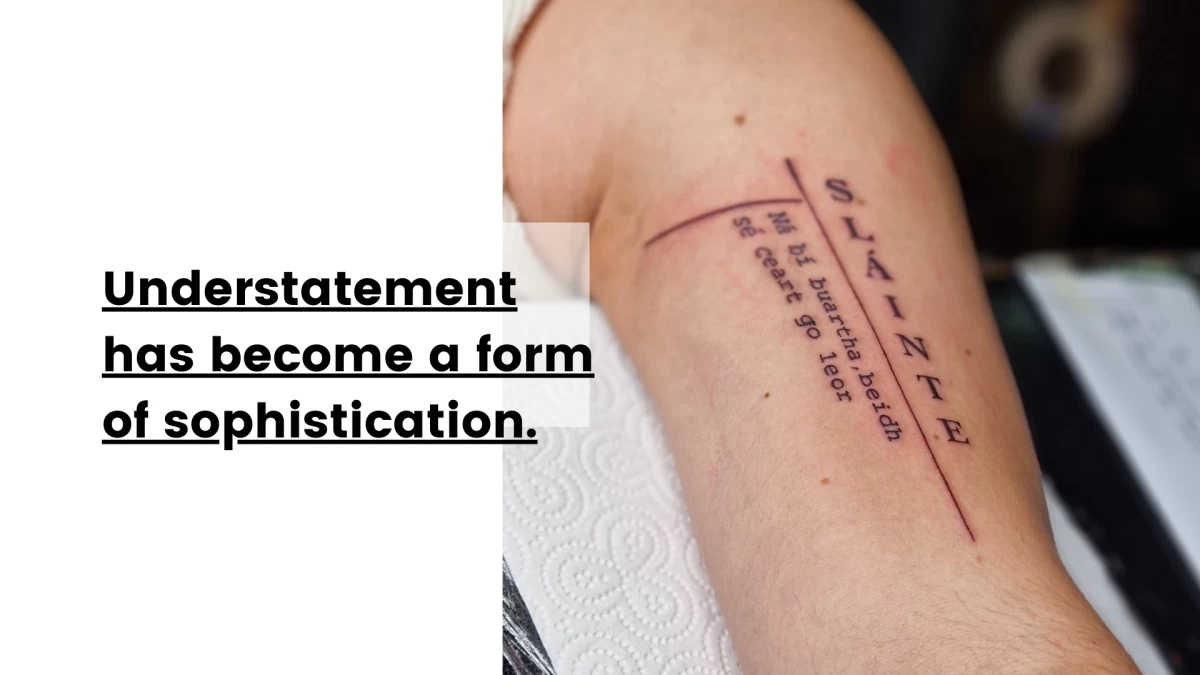
Understatement has become a form of sophistication.
In Dublin particularly, there is a visible appreciation for tattoos that feel intelligent rather than ornamental. Phrases often function as conceptual signatures — concise markers of perspective rather than decorative embellishments. Humour plays a distinctive role. Darkly ironic or gently self-aware phrases resonate strongly. They acknowledge complexity rather than projecting curated positivity.
Minimalist language tattoos, in this sense, mirror contemporary identity structures.
Modern identity is fluid, layered, evolving. Definitive self-descriptions feel increasingly artificial. Short quotes align with this fluidity. They suggest orientation rather than definition. They imply reflection rather than proclamation.
The aesthetic success of a quote tattoo is inseparable from its typographic execution.
Letter spacing, for instance, is one of the most critical yet invisible variables. Human perception interprets spacing subconsciously. Even technically precise letters can feel visually unstable when kerning lacks balance. Typography is governed by rhythm. Rhythm is governed by proportion. Proportion is governed by design discipline.
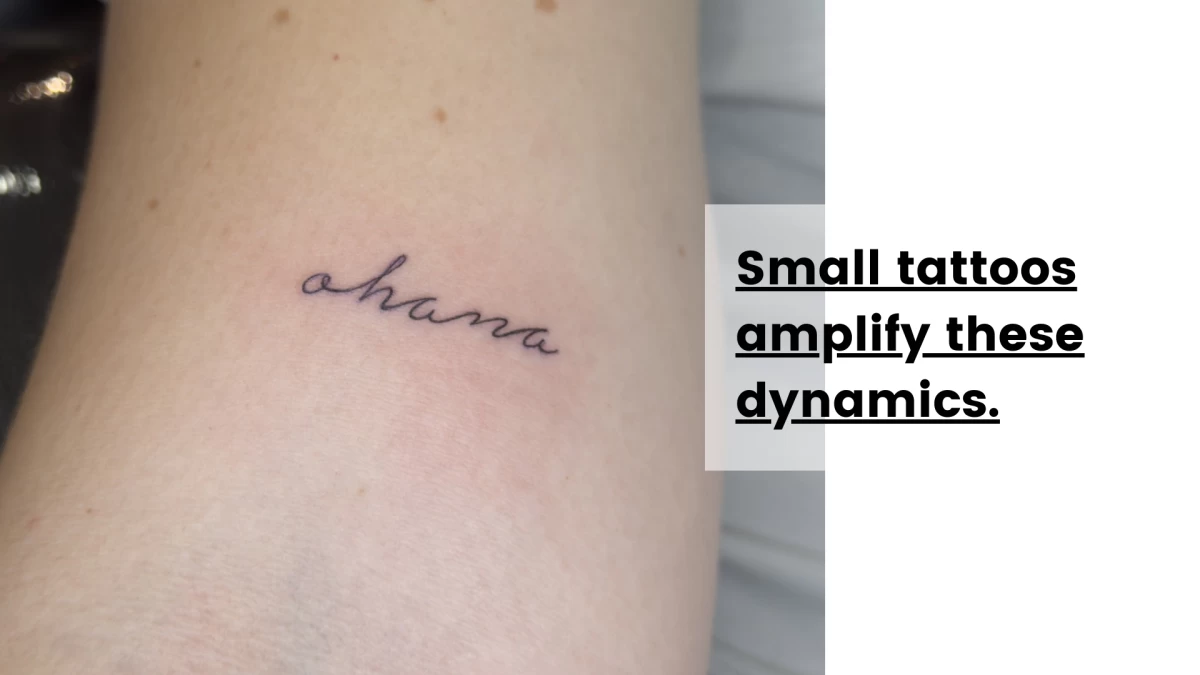
Small tattoos amplify these dynamics.
Micro-lettering, while visually delicate and increasingly popular, introduces heightened technical demands. Line weight must remain sufficient to resist visual degradation over time. Depth must remain consistent to prevent patchiness or blur. Overcrowding becomes structurally hazardous. Minimalism cannot be achieved through compression.
Elegance requires breathing space.
Aging behaviour is often misunderstood in lettering tattoos. Well-executed typography ages predictably. Poorly structured typography ages aggressively. Blur risk correlates strongly with line thickness, spacing density, anatomical distortion, and execution consistency. These variables are controllable. Regret associated with quote tattoos is therefore frequently misattributed to concept rather than construction.
Design errors masquerade as conceptual regret.
What makes short quotes particularly resilient is their visual adaptability. They can remain discreet or be integrated into larger compositions later. They coexist harmoniously with other tattoo styles. They resist stylistic obsolescence more effectively than trend-driven imagery. Language, unlike visual trends, does not expire in the same way.
Words possess structural timelessness.
There is also something inherently rebellious about minimalist phrase tattoos. In an environment historically associated with visual maximalism, reduction becomes a statement. Restraint becomes an aesthetic choice rather than absence of ambition. Subtle tattoos reject spectacle without rejecting meaning.
They do not compete for attention.
They exist with quiet confidence.
Ultimately, meaningful phrase tattoos occupy a unique intersection of language, design, psychology, and identity. Their success depends on more than selecting a sentence that “sounds nice”. It requires semantic durability, typographic precision, anatomical logic, and technical discipline.
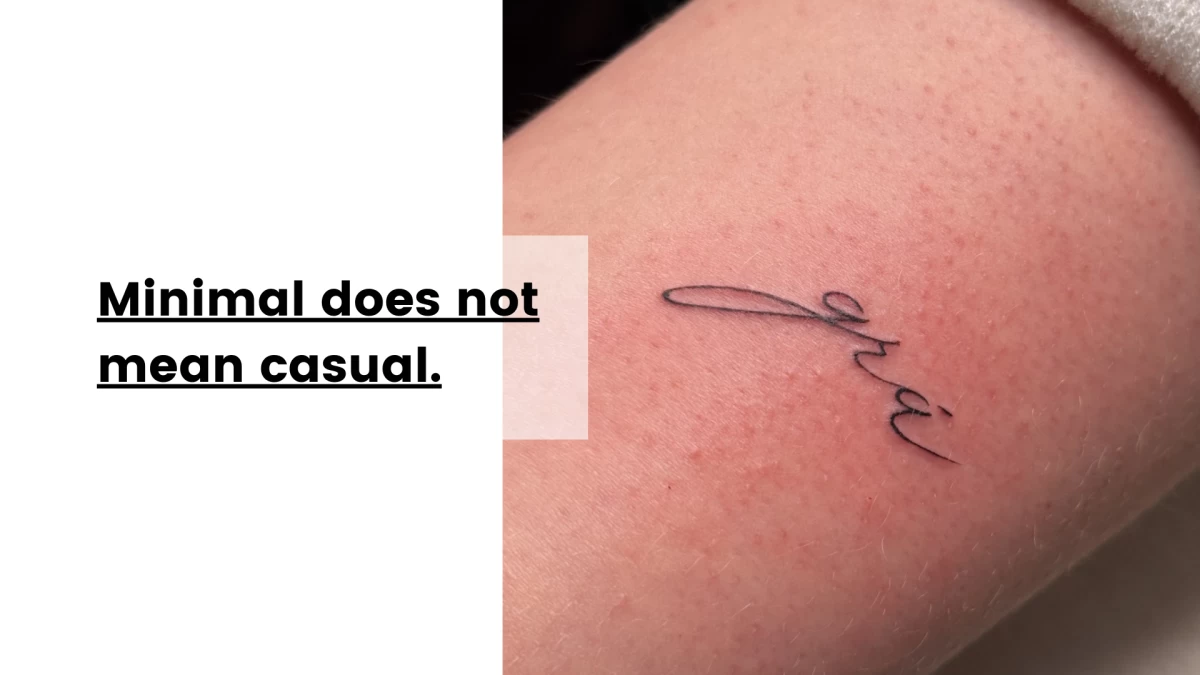
Minimal does not mean casual.
Short quotes, when designed thoughtfully, achieve something few tattoo styles manage so efficiently: emotional density without visual excess. They integrate narrative into form. They transform language into visual identity. They remain conceptually alive long after trends shift.
Because sometimes a few words are enough.
And sometimes they are everything.

Hélène


This might interest you
Here’s a selection of related posts


